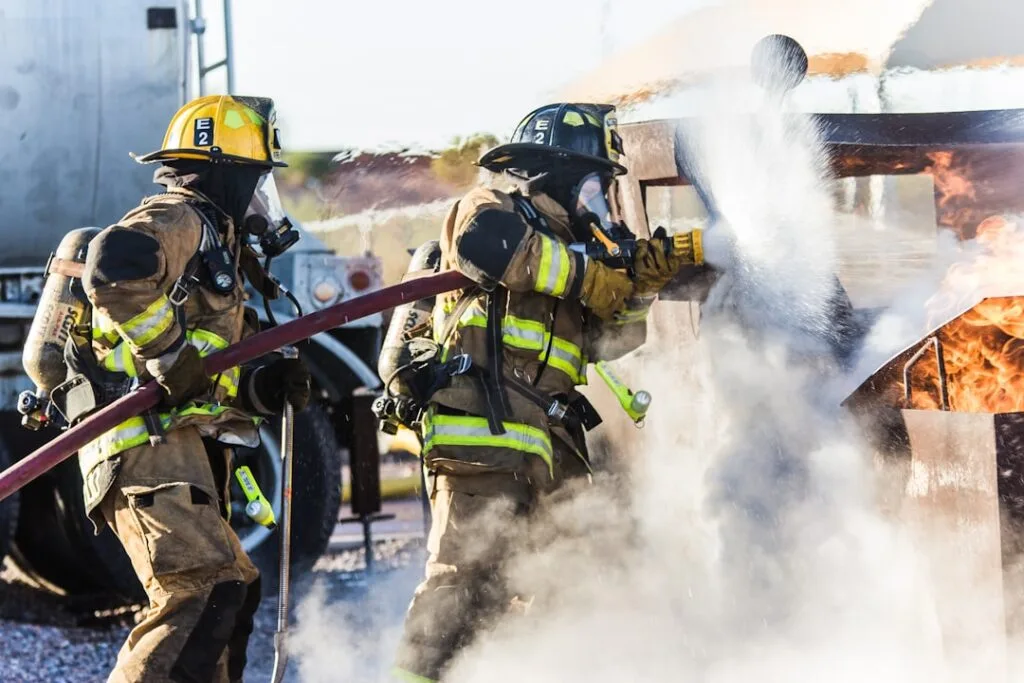
While property managers focus heavily on equipment inspections and code compliance, there’s a critical fire safety requirement that 70% of buildings fail to properly implement: mandatory fire safety training for building staff and occupants. This oversight creates significant liability exposure and can void insurance coverage when incidents occur.
OSHA’s Fire Safety Training Mandates
The Occupational Safety and Health Administration requires specific fire safety training for building employees, but these requirements extend beyond basic fire drills. Under OSHA 1910.38, employers must provide training on emergency action plans, evacuation procedures, and the proper use of fire extinguishers.
For buildings with more than 10 employees, written emergency action plans are mandatory. These plans must be reviewed with each employee covered by the plan, and employees must be trained before the plan is implemented, whenever their responsibilities change, and whenever the plan is modified.
A Chicago office building faced a $250,000 OSHA fine after a small kitchen fire revealed that 80% of their staff had never received proper fire extinguisher training, despite having extinguishers throughout the building.
The Documentation Dilemma
Training documentation is where most buildings fail. OSHA requires employers to maintain records of all fire safety training, including:
- Date of training sessions
- Names of attendees
- Training content covered
- Trainer qualifications
- Signed acknowledgments from participants
Many property management companies rely on informal training or assume that new hire orientations cover these requirements adequately. This assumption proves costly during OSHA inspections or when insurance claims are filed after fire incidents.
Beyond OSHA: Local Fire Code Training Requirements
Local fire codes often impose additional training requirements that vary significantly by jurisdiction. Many cities require:
- Annual fire warden training for designated employees
- Quarterly evacuation drills with documentation
- Specialized training for employees who handle hazardous materials
- Fire extinguisher training every three years
A property manager in Seattle discovered this gap when their local fire marshal cited them for lacking required fire warden documentation during a routine inspection. The violation resulted in a $15,000 fine and a mandated training program for all building staff.
Insurance Implications of Training Failures
Insurance carriers increasingly scrutinize fire safety training records when processing claims. Inadequate training documentation can lead to claim denials or reduced settlements, particularly in cases involving:
- Delayed evacuation responses
- Improper use of fire suppression equipment
- Failure to follow established emergency procedures
- Injuries during evacuation
One Atlanta office complex faced a $2.8 million insurance dispute after a fire incident where untrained security staff failed to properly activate the building’s fire suppression system. The insurance company successfully argued that inadequate training contributed to the extensive property damage.
Tenant Training Responsibilities
The training obligation extends beyond building staff to include tenant responsibilities. Property managers must ensure that:
- Tenant employees receive evacuation procedure information
- Floor wardens are designated and trained in multi-tenant buildings
- Special procedures are communicated for tenants with mobility-impaired employees
- Tenant modifications to spaces don’t compromise evacuation routes
Many leases inadequately address these training requirements, leaving property managers uncertain about their obligations and tenants confused about their responsibilities.
Technology Solutions for Training Compliance
Modern training management tools can streamline compliance and documentation. Digital systems can:
- Schedule automatic training reminders
- Track completion rates across all building personnel
- Generate compliance reports for inspectors
- Store training certificates and acknowledgments
- Integrate with building access systems to ensure trained personnel
However, technology alone isn’t sufficient. The training content must be current, relevant, and properly delivered by qualified instructors.
Creating an Effective Training Program
Successful fire safety training programs include several key components:
Regular Schedule: Establish quarterly training sessions rather than annual ones. Frequent, brief sessions improve retention and ensure coverage for new employees.
Role-Specific Content: Customize training based on employee responsibilities. Security staff need different training than maintenance personnel or administrative workers.
Hands-On Practice: Include actual fire extinguisher use, evacuation route walks, and emergency communication procedures.
Multi-Language Options: Provide training in languages spoken by building staff to ensure comprehension.
A Dallas property management company reduced their training compliance violations by 95% after implementing monthly 15-minute training sessions instead of annual hour-long meetings.
Vendor Coordination for Training
Many buildings rely on fire safety vendors to provide training, but coordination challenges often arise. Ensure that:
- Training schedules align with inspection calendars
- Vendor trainers meet local certification requirements
- Training content reflects building-specific procedures
- Documentation standards match regulatory requirements
Cost-Effective Training Implementation
Training doesn’t have to be expensive to be effective. Consider:
- Partnering with local fire departments for free training sessions
- Sharing costs with other buildings in your portfolio
- Training internal staff to become certified trainers
- Using online modules for basic requirements
The investment in proper fire safety training pays dividends through reduced liability, lower insurance premiums, and improved emergency response capabilities. Property managers who treat training as a compliance checkbox rather than a safety imperative expose their buildings to unnecessary risk and potential catastrophic liability.

